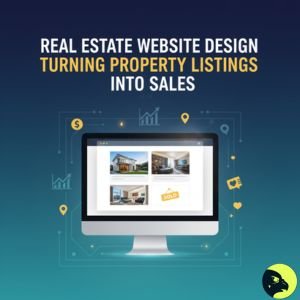
In today’s digital world, most people start their home search online before they even talk to an agent. This means a real estate business must have a strong online presence to grab attention and turn visitors into real clients. The key to doing that successfully lies in having a well-planned Real Estate Website Design.
A well-designed real estate website does much more than just list properties. It builds trust, gives users a smooth browsing experience, and makes it easy for them to take action—like booking a viewing or contacting an agent. In this article, we will discuss how a great Real Estate Website Design can turn property listings into real sales, what features it should include, and how it can help your business grow.
1. Why Real Estate Website Design Matters
Your website is often the first impression a buyer or seller gets of your business. If the website looks unprofessional, loads slowly, or feels hard to navigate, visitors will likely leave and go to a competitor’s site.
A professional Real Estate Website Design helps build trust right from the first click. It shows that you are serious about your business and care about your clients’ experience. A clean layout, high-quality property photos, and easy-to-read information can make users stay longer and explore more. The longer they stay, the higher the chance they will contact you or make a purchase.
2. First Impressions That Sell
Imagine a visitor landing on your website for the first time. Within seconds, they decide if they want to stay or leave. This is where design plays a huge role.
A good Real Estate Website Design should have:
- An eye-catching homepage that highlights your top listings or special offers.
- Professional property photos that make each home look appealing and trustworthy.
- Clear call-to-action buttons like “Contact Us,” “Schedule a Visit,” or “View Details.”
- Simple navigation menus so users can easily find what they are looking for.
When all these elements come together, visitors are more likely to trust your brand and consider doing business with you.
3. Easy Navigation and Fast Loading Speed
A user-friendly website is one that helps visitors find what they need quickly. If your website is confusing or takes too long to load, potential clients might lose interest.
An effective Real Estate Website Design focuses on smooth navigation. You can organize your listings by categories such as property type, price range, or location. Adding a search bar with filters makes it easier for users to find properties that match their needs.
Loading speed is equally important. Most users will leave if your website takes more than three seconds to load. Compress images, use fast hosting, and avoid unnecessary plugins to make your website faster.
4. High-Quality Property Photos and Videos
People buy what they can see. In real estate, visuals are everything. A beautiful photo or video tour can make a huge difference in how quickly a property sells.
A strong Real Estate Website Design must include high-resolution images, 360-degree virtual tours, and even drone footage when possible. These features help potential buyers feel like they are walking through the property, even if they are viewing it online.
Videos also create emotional connections. For example, a short video showing the neighborhood, nearby schools, and parks can convince buyers that this is the perfect place for them.
5. Mobile-Friendly Design
Most people browse property listings on their smartphones. If your website is not mobile-friendly, you could lose a large number of potential clients.
A responsive Real Estate Website Design automatically adjusts to any screen size, whether it’s a phone, tablet, or laptop. This ensures that every visitor has a smooth and comfortable experience no matter what device they use.
Mobile users should be able to view property photos, read descriptions, and contact agents easily. A mobile-friendly website not only improves user experience but also helps your website rank higher on search engines.
6. Search Engine Optimization (SEO) for More Traffic
Even the best design will not help if people cannot find your website. That’s where SEO comes in.
To make your Real Estate Website Design work effectively, optimize it for search engines. Use keywords like “real estate in [your city]” or “homes for sale near me” throughout your pages. Create blog posts about local property trends, buying tips, and neighborhood guides to attract more organic traffic.
Also, optimize property listings with unique titles and descriptions. This helps your listings appear on Google and other search engines when people search for homes.
7. Build Trust with Reviews and Testimonials
Trust is everything in the real estate industry. People want to know that they are dealing with professionals. Adding reviews and testimonials from past clients can help build that trust.
Include a section on your website that displays positive client feedback, along with their photos if possible. This shows new visitors that others have had good experiences with your business. A smart Real Estate Website Design uses testimonials as social proof to encourage others to reach out.
8. Easy Contact and Lead Forms
Once a visitor is interested in a property, they should be able to contact you quickly. Make sure your contact forms are simple and easy to fill out.
You can also add instant chat options, WhatsApp buttons, or phone call features to make communication even faster. A well-designed Real Estate Website Design includes contact buttons on every property page so users can reach you right away without scrolling too much.
9. Integrate Google Maps and Location Features
Location is one of the most important factors in real estate. Integrating Google Maps on your website allows visitors to see exactly where the property is located.
This feature helps users understand nearby facilities like schools, hospitals, markets, and parks. A great Real Estate Website Design uses maps to make the experience more interactive and informative.
10. Show Local Expertise
People prefer agents who understand the local area well. You can use your website to show your local knowledge by adding area guides, blog articles, or community insights.
For example, you can write posts like “Top 5 Family-Friendly Neighborhoods in Islamabad” or “Best Investment Areas in Karachi.” This type of content not only helps visitors but also improves your search rankings.
A professional Real Estate Website Design with local information positions your business as a trusted expert in your region.
11. Highlight Special Features
Every property has something unique that makes it stand out. Use your website to highlight those special features—like a large backyard, modern kitchen, or ocean view.
Create dedicated property pages with detailed descriptions, clear pricing, and attractive visuals. A good Real Estate Website Design presents this information in an organized and appealing way so that users can easily compare options and make decisions faster.
12. Use Calls-to-Action Effectively
A call-to-action (CTA) is a button or message that tells users what to do next. Examples include “Book a Visit,” “Get More Info,” or “Contact Agent.”
Without CTAs, visitors might leave your site without taking any action. Effective Real Estate Website Design uses CTAs strategically across all pages to guide visitors through the buying process.
Make sure your CTAs are visible, attractive, and placed at the right spots—like after property descriptions or at the bottom of blog posts.
13. Keep Your Listings Updated
Nothing frustrates visitors more than finding outdated property listings. Regularly update your website with current listings and remove sold properties.
This not only keeps your website accurate but also shows that your business is active and professional. Consistency is a big part of good Real Estate Website Design because it builds reliability.
14. Use Analytics to Improve Performance
Once your website is live, it’s important to track how people use it. Tools like Google Analytics can help you understand which pages perform best and where visitors drop off.
By studying these insights, you can improve your Real Estate Website Design over time. You can add more photos to popular listings, create stronger CTAs, or adjust your layout based on user behavior.
15. Make Your Brand Stand Out
Your website should reflect your brand’s personality. Use consistent colors, fonts, and logos to make your brand easy to remember.
A unique Real Estate Website Design helps you stand out in a crowded market. When people remember your website and brand style, they are more likely to return or refer you to others.
Conclusion
A well-crafted Real Estate Website Design can turn your online visitors into loyal clients. It is not just about showing properties; it is about building trust, offering a smooth experience, and guiding people to take action.
When your website has beautiful visuals, simple navigation, fast loading, and smart SEO, you create a powerful online presence that works for you 24/7. By following the strategies shared above, your real estate business can turn property listings into real sales and grow faster in today’s competitive market.